
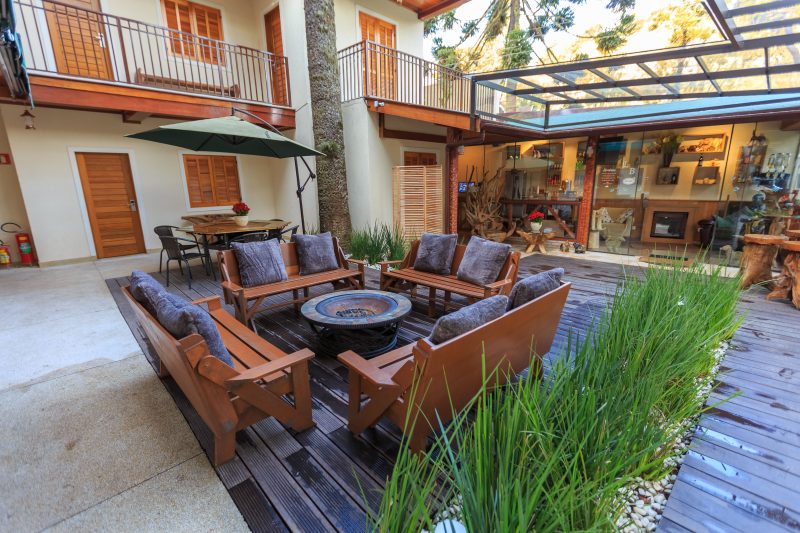
A modern garden should do more than look tidy from the kitchen window. It should make ordinary routines easier: eating outside without chasing the shade, finding the path after sunset, growing herbs without kneeling in compacted soil, and staying comfortable when the weather changes.
The most useful upgrades are rarely the most dramatic ones. They are the details that remove a small annoyance every day. A pergola can turn an exposed table into a dependable dining spot; a well-aimed light can make the route to the shed feel safer; a raised bed can put salad leaves at a more workable height. The right order is to solve how the garden is used first, then choose finishes and furniture.
Start with the routines, not the style
Before drawing a plan, watch the garden at three different times: a weekday morning, a late afternoon and an evening. Note where people naturally sit, where water collects, which route gets muddy, and which areas become unusable because of glare, wind or heat.
Turn those observations into a short brief. For example:
- A place for a quick coffee that catches morning sun.
- A shaded table for meals and laptop use.
- A clear, lit route between the house, bins and shed.
- A growing area that is easy to water and reach.
- A low-maintenance surface where chairs do not wobble.
This approach avoids a common mistake: spending the budget on one impressive feature while leaving the everyday route through the garden awkward. I would prioritise circulation and comfort over decorative objects. A beautiful garden that is difficult to cross in wet shoes is still difficult to use.
Create a dependable outdoor room
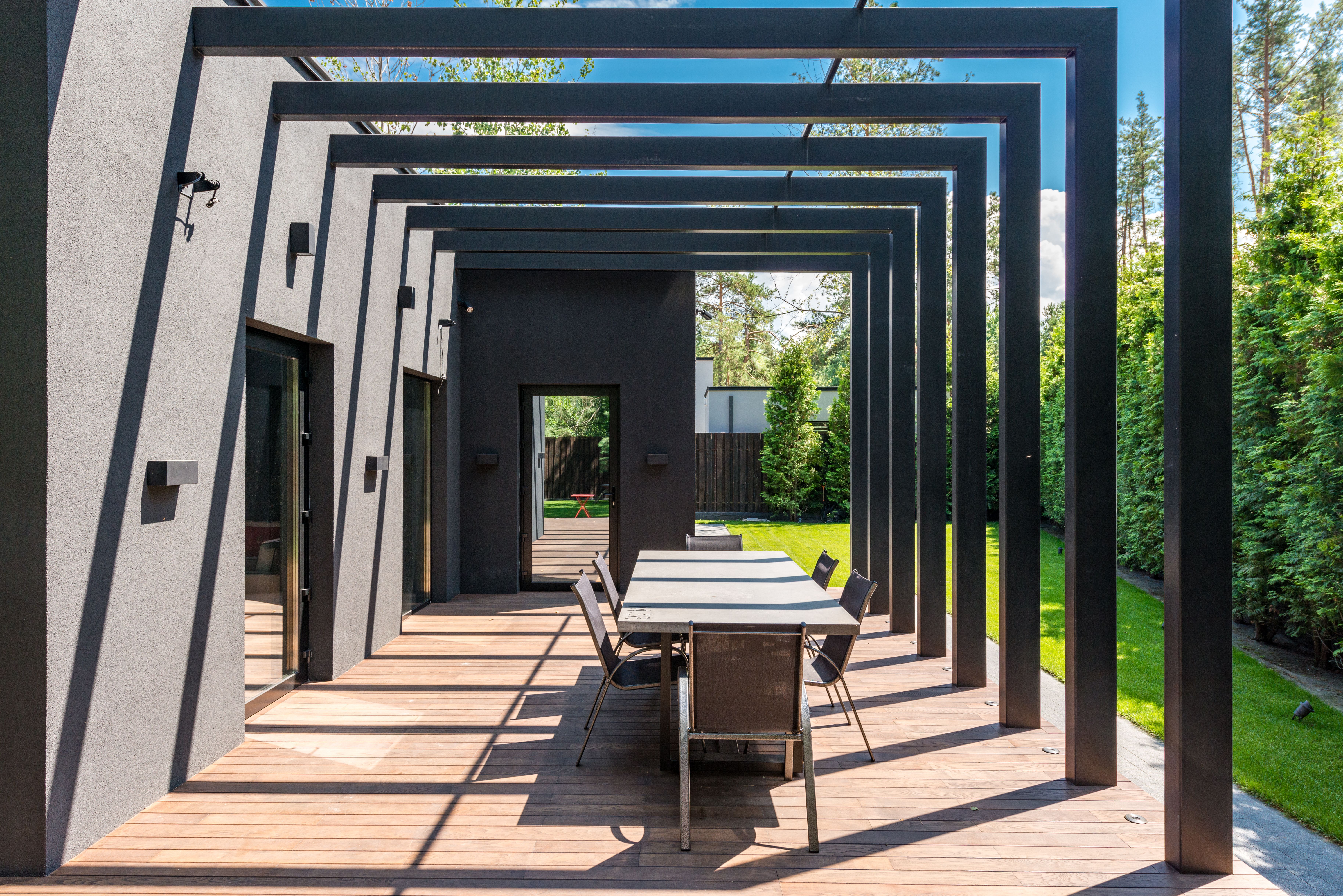
A pergola, canopy or carefully positioned tree can give an outdoor area a stronger sense of purpose. The goal is not to cover every square metre. It is to make one useful area dependable enough that people choose it repeatedly.
Think in layers rather than treating shade as a roof-only decision:
- Overhead cover: slatted timber, retractable fabric or a planted structure can reduce direct sun while preserving daylight.
- Wind filtering: open screens, hedges and tall planting can slow wind without creating the turbulence caused by a solid fence.
- Underfoot stability: a level, well-drained surface matters more than a fashionable finish if the space is used for dining.
- Task storage: keep cushions, outdoor crockery or gardening tools close to the zone where they are used.
Leave enough room around the table for chairs to move back and for people to pass behind them. A cramped dining zone often feels smaller than it is because every movement collides with furniture or planting.
Use lighting to extend the useful day

Good garden lighting is a navigation system with atmosphere, not a collection of bright fittings. Light the places where people walk, pause and work, then allow darker areas to remain dark. This usually feels calmer and reduces glare into neighbouring properties and windows.
The U.S. Department of Energy recommends efficient outdoor lamps alongside controls such as timers, photosensors and motion sensors. Its lighting guidance notes that LEDs can use up to 90% less energy and last up to 25 times longer than traditional incandescent bulbs, although real savings still depend on the fitting, operating hours and control settings. Read the Department of Energy’s guidance on energy-efficient outdoor lighting before replacing a whole scheme.
Use different lighting layers for different jobs:
- Path lighting: low, shielded fittings that show edges, steps and changes in surface.
- Activity lighting: brighter, controlled light over a grill, workbench or outdoor table.
- Accent lighting: selective illumination for a tree, wall or planting feature.
- Security lighting: motion-activated light near entrances, with the sensor aimed at the approach rather than directly at a neighbour.
Avoid placing identical lights at regular intervals simply because the spacing looks neat on a plan. Uneven, purposeful pools of light often give better orientation and a more natural evening view.
Choose seating that can stay outside
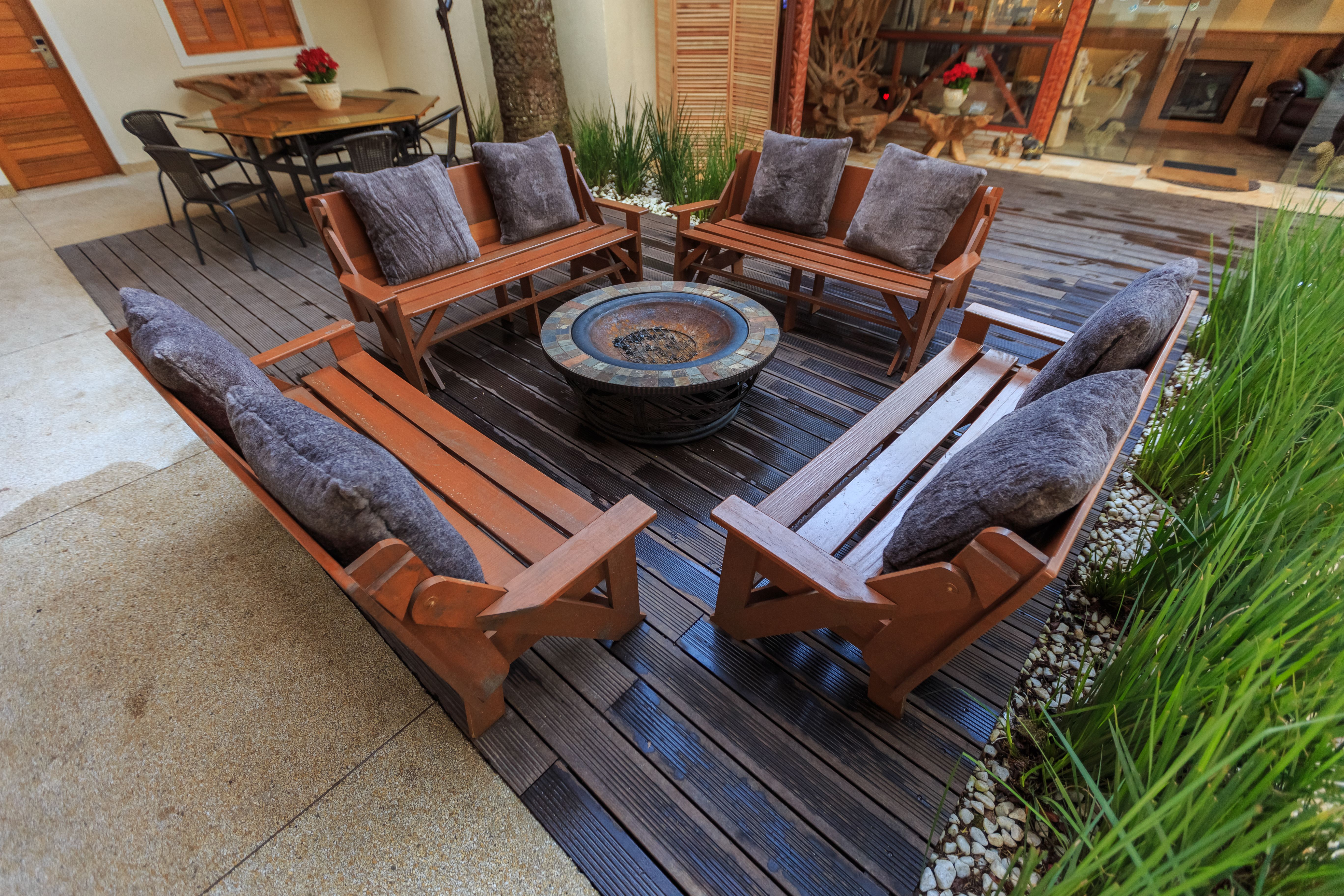
Outdoor furniture works hardest when it is comfortable enough for a long conversation and uncomplicated enough to leave in place. That means considering seat height, armrests, back support, drainage and the amount of effort involved in moving or covering each piece.
For a garden exposed to rain, compare materials by how they age and how they are maintained, not just by their first impression. Timber may need periodic care; metal can become hot in full sun; some plastics are light but prone to movement in wind. A durable, easy-clean option such as composite outdoor furniture can be useful where the priority is leaving seating outside with less routine upkeep, but the right choice still depends on local exposure and the specific construction.
| Question | Why it matters | Simple check |
|---|---|---|
| Can water drain away? | Standing water speeds staining, corrosion and deterioration. | Look for open slats, drainage holes or quick-drying cushions. |
| Will it move in wind? | Light chairs can become a nuisance or a hazard. | Test stability on the actual paving or decking. |
| Is the seat comfortable for 30 minutes? | Short-term showroom comfort does not equal daily use. | Sit upright and relaxed before deciding. |
| Can it be repaired? | Replaceable parts can extend useful life. | Check whether covers, slats, feet or fixings are available. |
For fire-pit seating, keep the circle generous and check local rules, fuel restrictions and separation distances before installation. Smoke direction matters as much as appearance: the most attractive location is not useful if prevailing wind sends smoke across the dining table or into the house.
Make productive planting easier to reach
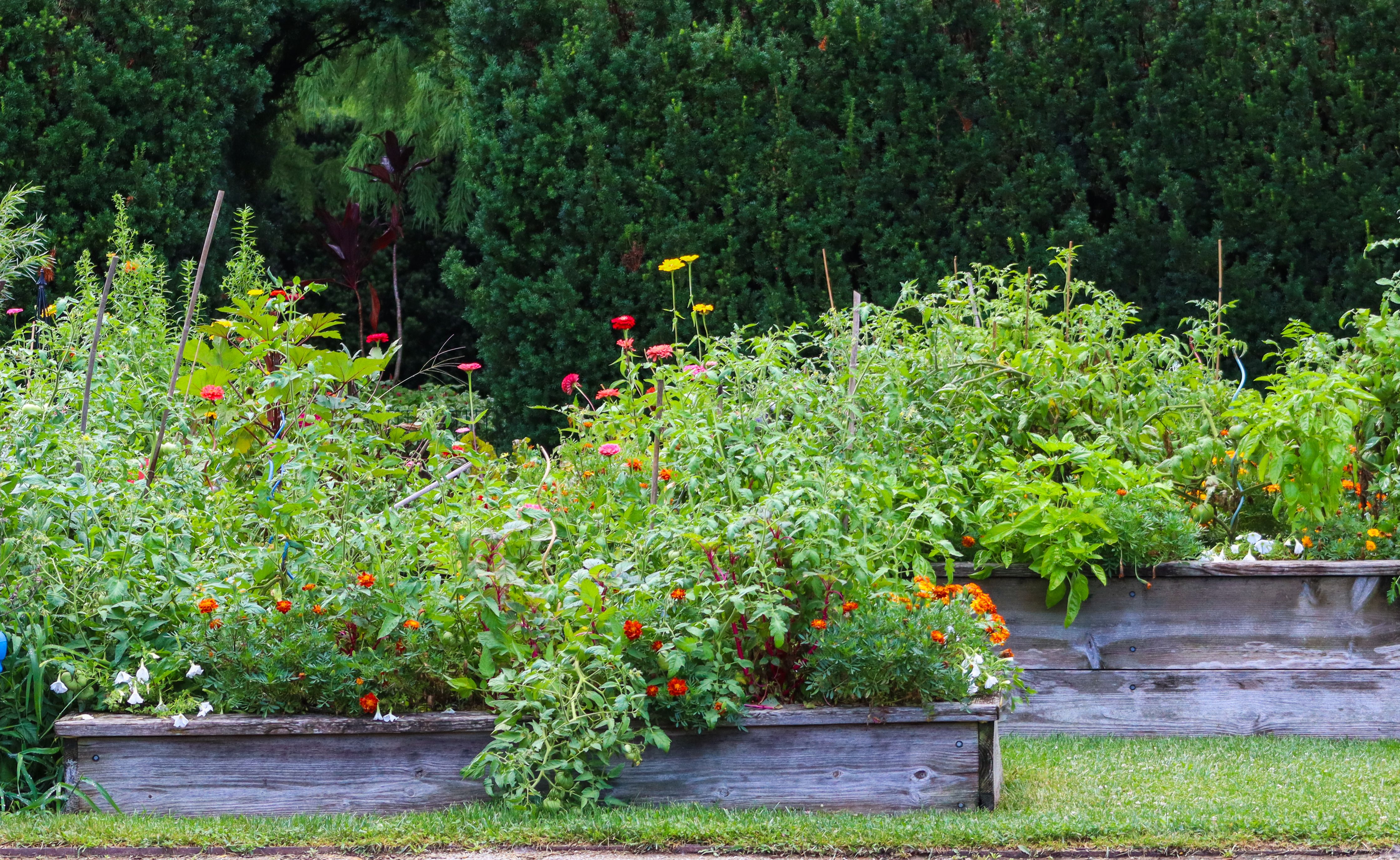
Raised beds are often presented as a universal garden improvement, but they are not automatically better than planting in the ground. The RHS points out that plants need good soil, moisture and sunshine wherever they grow; raised beds are particularly useful when the existing ground is waterlogged, compacted or difficult to work.
They also create a clearer maintenance system. One bed can hold herbs, another salad crops, and another flowers for pollinators. Paths between them stop people compacting the soil and make it easier to inspect plants without stepping into the growing area.
Use these dimensions as starting points rather than rigid rules. They come from RHS guidance on raised beds:
| Feature | Starting dimension | Reason |
|---|---|---|
| Bed width | Less than 1.5 m | Allows most people to reach the centre without standing on the soil. |
| General bed depth | About 30 cm | Suits shallow-rooted crops such as salad leaves and strawberries. |
| Deeper planting | About 45 cm or more | Gives shrubs and larger plants more root volume. |
| Standard path | At least 45 cm | Provides basic access between beds. |
| Wheelchair-friendly path | About 1 m | Allows more usable clearance for access. |
Source: RHS raised-bed guidance, accessed for this article in October 2026. Actual dimensions should reflect the user, plants, tools and available space.
There is a trade-off: raised beds generally drain faster and can dry out sooner than ground-level soil. Add mulch, plan a convenient water source and avoid making the beds so deep that filling and maintaining them becomes expensive or physically demanding.
Let the garden handle rain better
Water management is one of the least glamorous upgrades and one of the most noticeable after heavy rain. Start by tracing the route from roof downspouts, patios and paths. If water rushes across a hard surface, the garden is losing both moisture and control.
A rain garden is a shallow planted depression that receives runoff and allows it to soak into the ground. According to the U.S. EPA, it can also filter pollutants and provide habitat for wildlife. The location must be checked carefully: avoid foundations and underground utilities, confirm how quickly the soil drains, and provide an overflow route for larger storms. The EPA’s rain-garden guidance explains the basic siting principles.
Other useful interventions include:
- Redirecting a downspout toward a planted area, where local rules and ground conditions allow it.
- Adding a water butt or other storage so captured rain can be used during dry periods.
- Replacing a small section of impermeable paving with a permeable surface.
- Using mulch around established plants to slow evaporation and reduce bare soil.
- Creating a shallow swale or planted edge where the garden naturally falls.
Do not treat a rain garden as a cure for every drainage problem. If soil remains saturated for long periods, if water threatens the building, or if the site has a high water table, get site-specific advice before excavating. Sometimes the best modern upgrade is simply choosing plants that can live with the conditions instead of forcing the ground to behave differently.
A sensible order for the work
Sequence matters because later work can damage earlier work. A practical order is:
- Map movement and water. Mark entrances, routes, shade, wind and puddling before choosing finishes.
- Fix levels and drainage. Resolve runoff and unstable ground before laying paving or building beds.
- Install power, water and lighting infrastructure. Conduits and irrigation are much easier before surfaces are finished.
- Build the main outdoor room. Add the pergola, canopy, deck, patio or other structural element.
- Plant for the long view. Use trees, shrubs and perennials to shape shade and privacy over time.
- Add furniture and small details last. This lets the actual scale of the finished garden guide the final choices.
A useful test is to live with a temporary version first. Mark a proposed seating zone with chairs and string, place a lamp where a path fitting might go, or outline a bed with timber offcuts. If the arrangement is awkward for a week, it will be awkward when built in stone.
Frequently Asked Questions
A garden that earns its keep
The strongest modern garden is not the one with the longest feature list. It is the one that makes the next ordinary decision easy: where to sit, where to walk, where to put the watering can, and whether it is worth staying outside for another half hour.
Start with one friction point you can describe precisely. Then fix the ground conditions, the route or the comfort problem behind it. Once those fundamentals work, the visual style has room to become personal rather than compensating for a garden that is difficult to live with.