
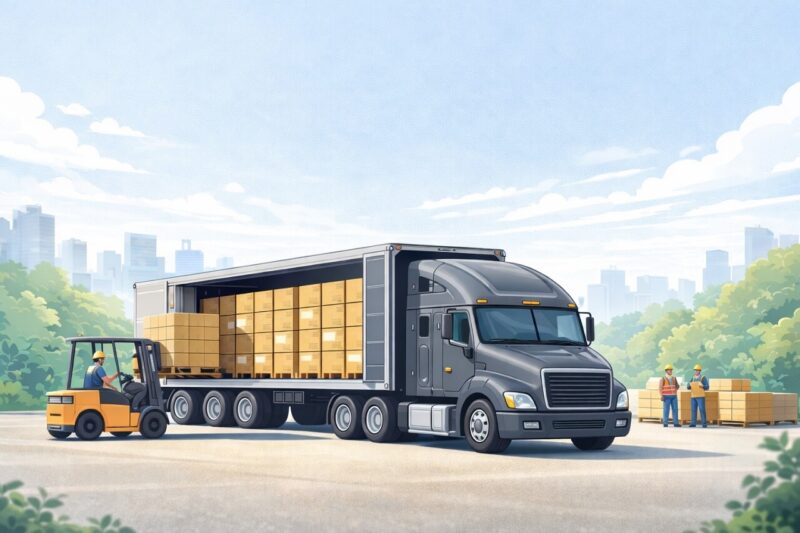
Full truckload shipping makes sense for Amazon sellers when shipment volume is large enough to fill most or all of a 53-foot trailer, when speed and predictability matter more than marginal freight savings, and when the cost of inventory delays outweighs the premium of booking an entire truck.
In practical terms, FTL becomes logical once your pallets regularly exceed 10 to 12 standard pallets, your total freight weight climbs above 15,000 to 20,000 pounds, or you are replenishing high velocity SKUs where a stockout would cost more than the difference between LTL and FTL rates.
What FTL Shipping Actually Means in the Amazon Context
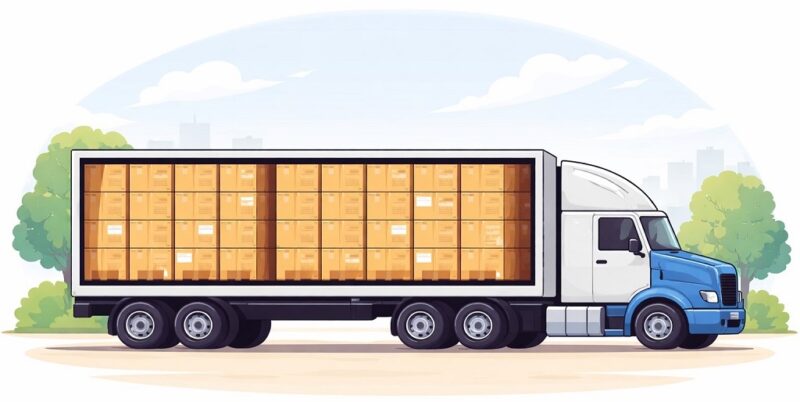
Full truckload shipping means you book an entire trailer for your inventory. The freight does not share space with other shippers’ pallets. The truck typically moves directly from your origin point, which may be a manufacturer, port warehouse, or prep center, to its destination, whether that is an Amazon fulfillment center or a third-party logistics site.
In Amazon operations, FTL is commonly used in three scenarios:
- Large restock shipments to multiple FBA fulfillment centers
- Consolidated imports that have been palletized and prepared
- Peak season replenishment, where transit delays can cause ranking loss
Unlike LTL, where your pallets may be transferred between terminals several times, FTL often involves fewer touchpoints. Fewer touchpoints generally reduce the risk of pallet damage, carton collapse, or lost cartons, which is critical when shipping case-packed inventory that must arrive compliant with Amazon’s labeling standards.
Volume Threshold: When Numbers Justify FTL
Many sellers wait too long before switching from LTL to FTL because they focus only on the freight rate per pallet instead of the total operational impact.
The practical breakpoints often look like this:
| Shipment Size | Typical Mode | Operational Notes |
| 1 to 6 pallets | LTL | Cost-effective for small loads, but higher handling risk |
| 7 to 12 pallets | LTL or Partial Truckload | Transition zone, rate comparison required |
| 13 to 26 pallets | FTL | Strong candidate for full truckload |
| 20,000+ lbs | FTL | Weight alone can justify a dedicated truck |
A standard 53-foot trailer can hold approximately 26 standard 40×48 pallets if floor-loaded and arranged efficiently. If you are consistently shipping half or more of that capacity, the math often shifts in favor of FTL, especially when accounting for appointment scheduling at Amazon fulfillment centers.
Speed and Predictability: The Real Advantage

Amazon’s inventory performance is directly tied to stock availability. If you go out of stock on a high-volume SKU, the impact is measurable:
- Loss of organic ranking
- Reduced Buy Box ownership
- Lower advertising efficiency
- Increased re-launch cost
LTL shipments are typically routed through regional terminals. Each transfer adds time and potential delay. During Q4 or Prime Day cycles, terminal congestion increases significantly.
FTL shipments, by contrast, usually move point to point. Transit times are more predictable because the truck is not waiting for consolidation or cross-docking.
Here is a simplified transit comparison:
| Factor | LTL | FTL |
| Average transit variability | High | Moderate to low |
| Terminal transfers | Multiple | Minimal |
| Appointment coordination | Shared | Dedicated |
| Damage risk | Higher | Lower |
For sellers managing just-in-time restocking models or tight storage limits imposed by Amazon IPI thresholds, transit reliability often matters more than per-pallet cost.
Cost Structure: Understanding the Real Equation
FTL is priced differently from LTL. Instead of being charged per pallet class and freight weight across a shared load, you are paying for truck capacity and mileage.
Typical FTL rate factors include:
- Origin and destination distance
- Fuel surcharge
- Lane availability
- Seasonal demand
- Weight and cube
At first glance, FTL appears more expensive for mid-sized shipments. However, when divided by pallet count, the per-pallet cost often drops significantly once you exceed a certain volume.
Example scenario:
| Metric | LTL (14 pallets) | FTL (14 pallets) |
| Total Freight Cost | $4,900 | $5,800 |
| Cost per Pallet | $350 | $414 |
| Damage Claims Risk | Moderate | Low |
| Transit Days | 7 to 10 | 4 to 6 |
Now compare that to 22 pallets:
| Metric | LTL (22 pallets) | FTL (22 pallets) |
| Total Freight Cost | $8,100 | $6,900 |
| Cost per Pallet | $368 | $314 |
The shift becomes clear. As volume increases, FTL often becomes both operationally cleaner and financially competitive.
Inventory Risk: Why Handling Matters

Amazon is strict about carton condition and pallet integrity. Collapsed cartons, unreadable FNSKU labels, or broken shrink wrap can trigger:
- Receiving delays
- Refusal at the dock
- Re-labeling fees
- Stranded inventory
Each time a pallet is transferred at an LTL terminal, forklifts handle it again. Shrink wrap weakens. Corners bend. Cartons shift.
FTL reduces these touchpoints. A properly wrapped pallet loaded at the origin may remain untouched until final unloading. For fragile products, high-value goods, or private-label items with custom packaging, this matters.
When working with a specialized prep facility such as the Dollan Prep Center FTL program, sellers often consolidate inbound inventory, ensure full compliance with Amazon labeling and pallet standards, and then dispatch a dedicated truck directly to fulfillment centers. This integration reduces the risk of Amazon compliance issues that can arise from damaged freight or repalletization errors.
Multi FC Shipments: When Splitting Loads Makes Sense
Amazon often splits shipments across multiple fulfillment centers. For smaller sellers, this creates a challenge. If your 20-pallet shipment is divided into 3 destinations, LTL may seem easier.
However, FTL can still be structured efficiently through:
- Drop trailer routes
- Sequential deliveries
- Cross-dock consolidation before dispatch
A prep center or logistics partner can build route-optimized FTL plans that reduce total freight cost across all assigned FCs.
Example:
| Scenario | Method | Outcome |
| 20 pallets, 3 FC destinations | 3 separate LTL shipments | Higher handling, longer transit |
| 20 pallets consolidated, then routed via FTL with sequential stops | Single dedicated truck | Faster cycle time, lower damage risk |
When shipment planning is done strategically, FTL is not just about size. It is about route design.
Peak Season and FTL Strategy
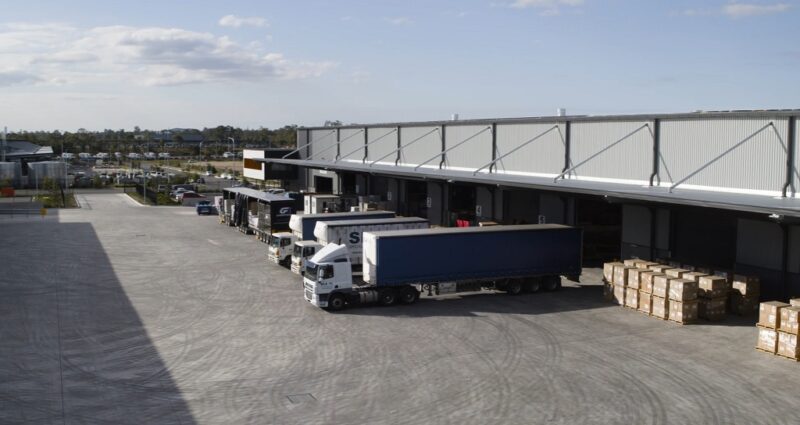
During Q4, freight markets tighten. Capacity shrinks. LTL terminals become congested. Appointment slots at Amazon FCs become harder to secure.
In peak periods, FTL offers two major benefits:
- Higher likelihood of secured capacity
- Greater control over delivery windows
If you are preparing for Black Friday, Cyber Monday, or Prime Big Deal events, a missed inbound shipment can cost significantly more than a modest freight premium.
Sellers who rely heavily on Q4 revenue often shift to FTL months before peak season to protect margin.
When FTL Does Not Make Sense
FTL is not always the answer. It typically does not make sense when:
- You are shipping fewer than 6 pallets
- Your products are low velocity and not time sensitive
- Cash flow does not support larger batch shipments
- Storage limits at Amazon prevent sending larger quantities
Smaller brands often grow into FTL rather than start with it. The shift usually happens once sales velocity and SKU count expand.
Strategic Growth Signal: FTL as a Scaling Indicator
One overlooked aspect of FTL shipping is what it signals about your business. Consistent FTL shipments often indicate:
- Stable supply chain
- Predictable demand forecasting
- Mature SKU portfolio
- Strong cash flow management
In other words, when FTL becomes your standard mode, your Amazon operation is typically operating at scale.
You are no longer reacting to stockouts. You are proactively replenishing inventory in bulk, reducing freight volatility, and structuring predictable inbound flows.
Decision Framework: Should You Switch?

Here is a simplified evaluation table to guide the decision:
| Question | If Yes | If No |
| Are you shipping 13+ pallets regularly? | Consider FTL | Stay LTL |
| Do stockouts significantly hurt ranking? | FTL preferred | LTL acceptable |
| Is your damage rate above 2%? | FTL may reduce risk | LTL manageable |
| Are you entering peak season? | FTL recommended | Evaluate volume |
The decision is rarely about one factor alone. It is a combination of volume, velocity, risk tolerance, and margin sensitivity.
Final Operational Perspective
FTL shipping for Amazon inventory makes sense when your shipment size approaches trailer capacity, when transit reliability directly affects revenue, and when minimizing handling risk protects brand integrity.
It becomes particularly valuable for high-volume private label sellers, brands preparing for seasonal demand spikes, and companies consolidating large import containers into compliant palletized loads.
At scale, FTL is not simply a freight choice. It is a supply chain strategy that prioritizes control, predictability, and revenue protection.